AC Service Business Management: A Complete Guide
How AC service and installation businesses can handle the summer rush: enquiries, installations, service calls, technicians, spares, AMC and payments — organised as one system.
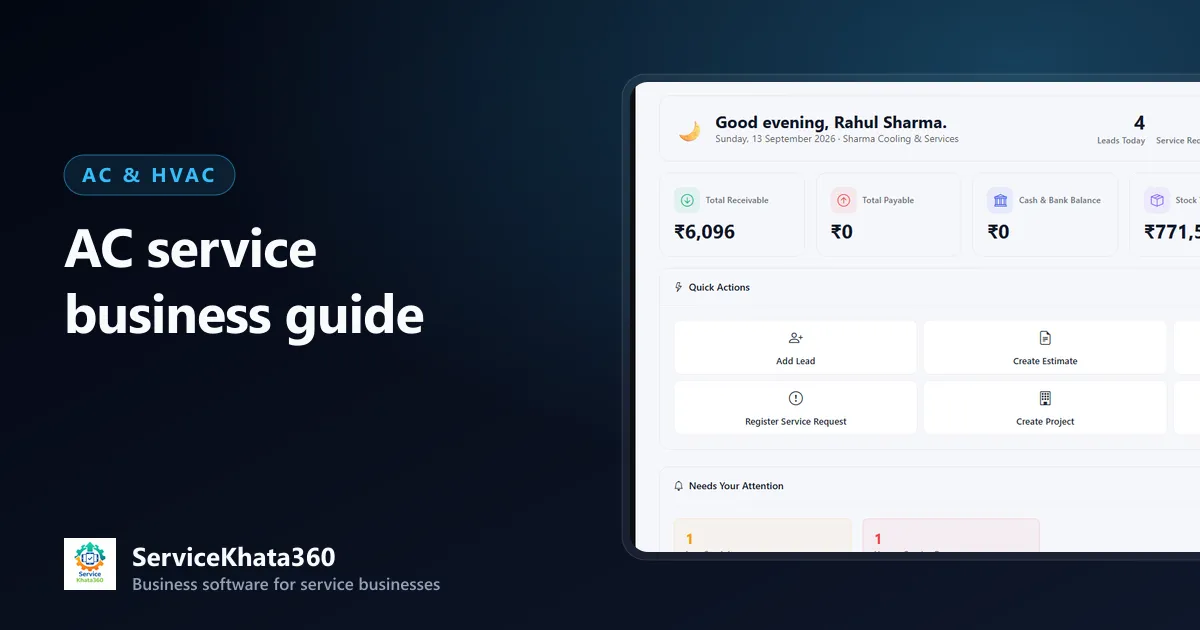
An AC service business has a very uneven year. From March to June, installation enquiries and "AC not cooling" calls arrive at the same time, technicians are on the road from morning to night, and spare parts run out. In the monsoon and winter, the work slows and AMC visits become the main activity.
The businesses that grow are the ones that use the quiet months to build a system for the busy ones. This guide covers the main parts of running an AC service business and how they connect.
The five streams of work in an AC business
- New installations — split, window, cassette and ductable units for homes, shops and offices
- Breakdown calls — not cooling, water leakage, noise, error codes
- Routine servicing — wet/dry service, filter cleaning, gas check
- AMC contracts — scheduled servicing for homes, offices and commercial sites
- Spare parts and units — sales and use in service
Each stream needs a slightly different process, but they share the same customers, technicians and stock. That is why running them in separate notebooks or apps causes so many gaps.
1. Enquiries and installations
Installation enquiries peak just before summer. Log every one with requirement ("4 split ACs for new office"), source, owner and follow-up date. For installations:
- Do a site check for larger jobs — wall strength, outdoor unit placement, pipe route, power point and stabiliser need.
- Quote standard pipe length and a per-metre rate for extra pipe.
- Schedule installation as a job for a specific technician and date.
Our AC quotation and invoice guide covers what to include.
2. Breakdown calls
Breakdown calls decide your reputation. Log every call as a ticket with the unit details, symptom, priority and due date. Customers forgive a delay much more easily than being forgotten. See how AC service companies can track customer complaints.
3. Technician scheduling
In peak season, the dispatcher's job is the hardest in the company. Group calls by area, match skill to job (gas leak and PCB repairs need experienced hands), and keep a visible list of jobs waiting for parts.
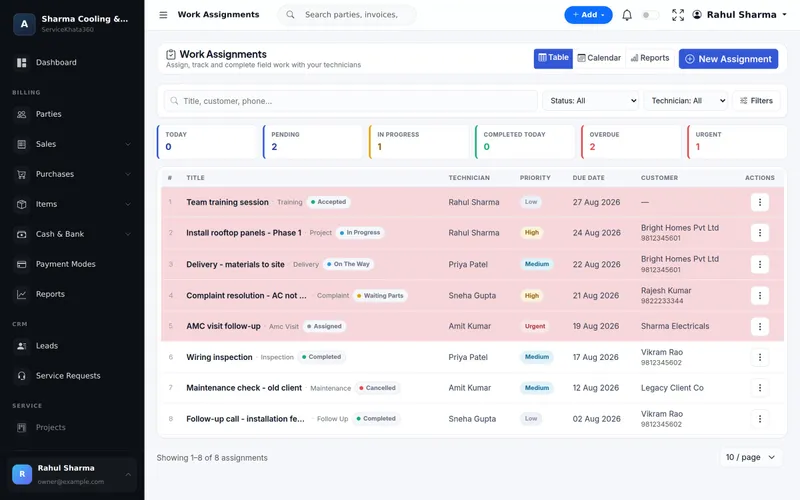
More detail in how to assign AC service calls to technicians.
4. AMC — your off-season income
AMC customers keep technicians busy in the quiet months and pay predictably. The essentials: record covered units with serial numbers, schedule all visits at the start of the contract, and flag renewals a month before expiry.
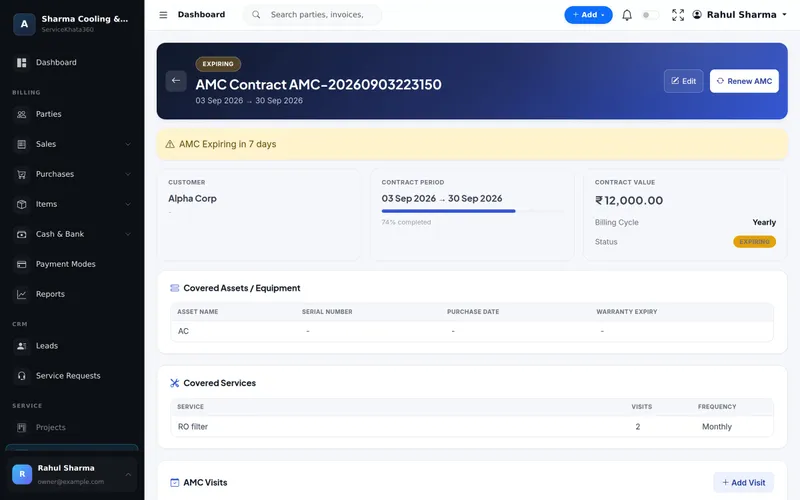
See managing AC AMC customers and renewals.
5. Spare parts and units
Capacitors, PCBs, fan motors, copper pipe and refrigerant should be stock items with low-stock levels set before summer. Every part used on a job should appear on the invoice, which also reduces stock. See managing AC spare parts and service inventory.
6. Billing and collections
Bill on completion, not at month-end from memory. Record advances for installations, apply them to the invoice, and keep a weekly list of unpaid and partially paid invoices.
Preparing for summer: a pre-season checklist
- Clean up the customer list — merge duplicates, update phone numbers.
- Call last year's service customers before the season starts; offer pre-summer servicing or an AMC.
- Review low-stock levels for fast-moving spares and refrigerant.
- Confirm technician availability and areas.
- Prepare standard quotation templates for common installations.
- Set up automatic acknowledgements so customers know their call is logged.
The numbers worth watching
- Open complaints and overdue complaints
- Jobs waiting for parts
- Installation quotations awaiting decision
- AMCs expiring in 30 days
- Unpaid and partially paid invoices
- Low-stock spares
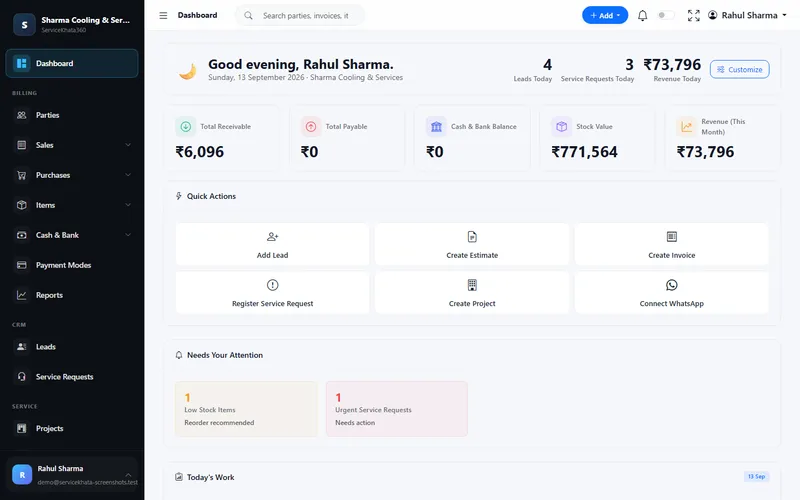
How ServiceKhata360 runs an AC service business
ServiceKhata360 connects leads, GST estimates, work assignments with live status and a calendar, service requests, AMC contracts and visits, inventory, invoices and payments on one customer record. The dashboard brings together today's leads, service requests, dues and low-stock items. With your WhatsApp number linked to ServiceKhata360, workflows can send technician details when a complaint is assigned and AMC expiry reminders.
See real screens and the full workflow on our AC and HVAC service management software page.
Frequently Asked Questions
What is the biggest operational problem in an AC service business?
Do I need separate software for billing and service?
Can ServiceKhata360 handle commercial HVAC projects?
Looking for one system to manage your AC service business?
See ServiceKhata360 with your own workflow — enquiries, estimates, technicians, service calls, billing and AMC.